What the Room Reveals
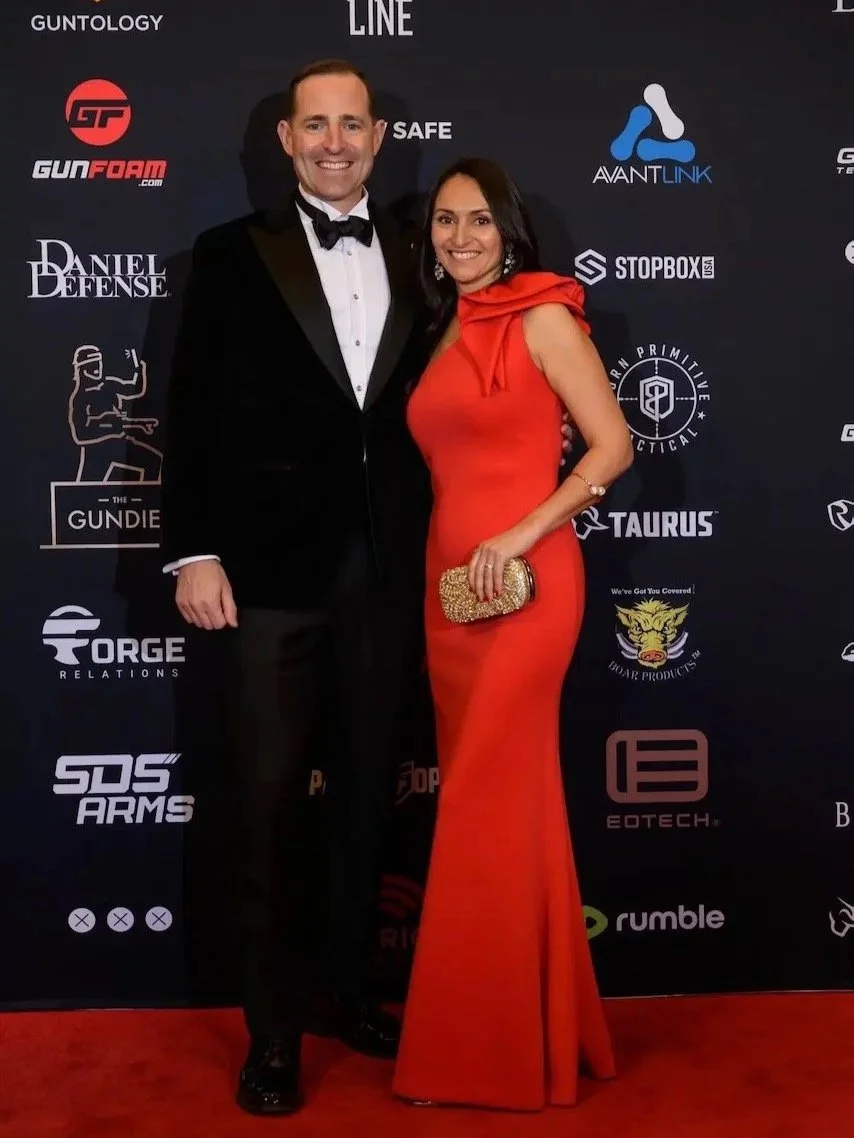
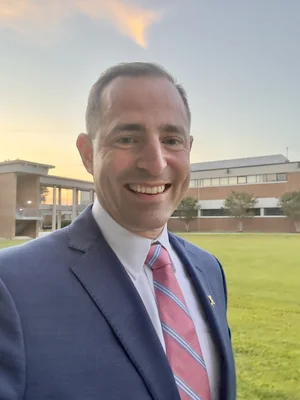
Michael Forras, Director of Sales - High Speed Gear, attends the Gundies Award Show with his wife, Nelli Forras.
Las Vegas has a way of stripping things down to their essentials.
Under the lights, beneath the noise, behind the spectacle, you start to see what actually holds when pressure is applied. You see who people are when schedules are tight, expectations are high, conversations are fast, and fatigue sets in. You see what systems work, which ones do not, and how people behave when no one is formally in charge.
SHOT Show is not a conference in the traditional sense. It is an ecosystem.
Miles of concrete, thousands of booths, tens of thousands of people, all moving with purpose, urgency, and varying degrees of exhaustion. Deals are being discussed in hallways, partnerships born over hurried lunches, and reputations quietly built or damaged in moments that never make a schedule.
What struck me most this year was not the scale of it all. I have been around large operations my entire adult life. What stood out was how much of this environment runs on something far more fragile than policy or authority.
It runs on trust.
There is no rank structure here. No formal chain of command. No one can compel cooperation. And yet, somehow, it works. Most of the time, it works remarkably well.
That alone makes SHOT Show an interesting case study in leadership.
Accountability Without Authority
Very few people at SHOT Show have authority over anyone else. They cannot order compliance. They cannot mandate behavior. And yet accountability exists everywhere.
You see it in the way people show up to meetings on time despite packed schedules. You see it in the way commitments are honored even when circumstances change. You see it when someone says, “That one is on me,” without being forced into it.
That kind of accountability does not come from enforcement. It comes from culture.
In environments where authority is limited or nonexistent, reputation becomes currency. Your word matters. Your follow through matters. How you treat people when there is nothing immediate to gain matters more than any formal agreement.
It reminded me of something I have seen repeatedly in high performing teams, whether in uniform or out. When authority is absent, influence fills the gap. When influence is strong, accountability does not need to be policed.
People do not want to be the weak link in a system built on mutual reliance.
The Pace Reveals the Truth
SHOT Show is exhausting by design. Long days, constant movement, sensory overload, and very little margin for error.
And exhaustion has a way of revealing what is real.
You see leaders who tighten their grip as fatigue sets in, attempting to control more as their energy drops. You also see leaders who do the opposite, who create space, empower their teams, and trust the people around them to carry weight when they cannot carry it all themselves.
The difference is noticeable.
Teams that operate with psychological safety move faster under pressure. Not because they rush, but because they do not waste energy on fear, second guessing, or covering themselves. They communicate clearly. They surface problems early. They solve issues before they metastasize.
In a place like SHOT Show, that matters.
The margin between a productive conversation and a missed opportunity can be measured in seconds. Teams that feel safe speaking up do not lose those seconds.
What the Gundies Revealed
One evening, in the middle of all of this motion, we stepped into a very different room.
During SHOT Show, we at High Speed Gear had the honor of being invited by our partners at Forge Relations LLC to attend The Gundies.
For those unfamiliar, the Gundies are more than an awards show. They exist to recognize creators, educators, and advocates who support the Second Amendment, responsible firearms ownership, and the broader conversation around individual liberty in America. At their core, they celebrate free speech, lawful rights, and civic engagement.
What stood out to me was not the stage, the awards, or even the production.
It was the room.
I saw people of every race, creed, gender, religious background, upbringing, and socioeconomic status gathered together. Alcohol was flowing, conversations were lively, and yet there was not a single altercation. Not one argument. Not one moment that matched the caricature so often painted of this community.
What I saw instead was one of the most genuinely inclusive industry events I have ever attended. People united by a shared love of America, faith, personal responsibility, and constitutional rights, including the Second Amendment. Respect was the default. Civility was the norm.
That does not happen by accident.
It happens because the culture of that room made it safe to be present without posturing. Safe to disagree without hostility. Safe to belong without uniformity.
Psychological safety is not about comfort. It is about respect. And that room had it in abundance.
Inclusion Without Performance
We talk a lot about diversity and inclusion in corporate spaces. Too often, those conversations become performative, focused more on optics than outcomes.
The room I stood in that night proved something quietly and convincingly.
Inclusion does not require constant announcement. It requires consistent behavior.
No one needed to explain why the room worked. No one needed to remind anyone how to act. The expectations were understood, modeled, and enforced socially, not formally.
That is how culture sustains itself.
When leaders talk about values but fail to live them under pressure, teams notice. When leaders model respect consistently, even when it would be easier not to, teams internalize it.
What I saw at the Gundies was a room governed by shared norms rather than imposed rules. That is a hallmark of mature leadership, whether in an industry, an organization, or a community.
Leadership Happens Between the Booths
The most important leadership moments at SHOT Show didn’t happen on stages or behind microphones. They happened in passing conversations, quick course corrections, and quiet moments of ownership.
They happened when someone introduced two people who should know each other. When a leader shielded their team from unnecessary noise so they could focus. When someone admitted they did not have an answer but committed to finding one.
None of that shows up on a highlight reel.
But that is where trust is built.
Leadership in environments like this is less about commanding attention and more about stewarding relationships. Less about control and more about clarity. Less about authority and more about influence.
What We Carry Forward
When I left Las Vegas, I did not leave with a single defining moment. I left with a pattern.
A pattern of environments that thrive without rigid authority. Teams that perform under pressure because they feel safe enough to be honest. Communities that remain civil because respect is expected, not enforced.
These are not abstract ideas. They are observable behaviors.
And they are transferable.
Whether you lead a company, a team, or simply influence the people around you, the lesson is the same. Culture always does more work than policy. Trust moves faster than control. And psychological safety is not a luxury, it is a performance tool.
Sometimes, all you have to do is step back and pay attention to the room.
It will tell you everything you need to know.